Astrophotography is the practice of capturing images of objects in the night sky, such as the Moon, planets, stars, nebulae, and galaxies. It combines photography, astronomy, and technology to reveal details and wavelengths that the naked eye cannot see.
Unlike traditional photography, astrophotographers work in low light. Because of this, you will find yourself taking long exposures, using specialised equipment, and processing raw data to produce a final image.
Imagine trying to photograph a candle 10 miles away through a swimming pool, while standing on a slowly moving carousel.
Categories of astrophotography
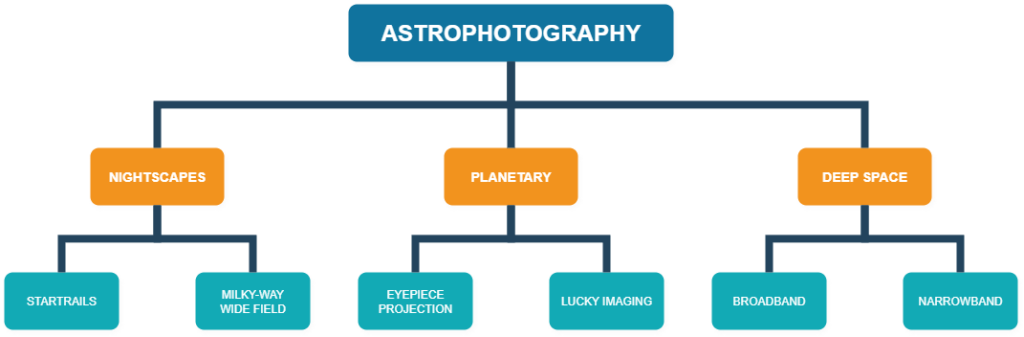
Generally speaking, astrophotography falls into three main types, based on the target being photographed. When starting, ask yourself what you want to photograph:
- Nightscape photography – wide-angle images of the night sky, often including landscapes or foreground elements
- Planetary imaging – capturing high-detail images of the Moon and planets
- Deep-sky astrophotography – imaging distant objects such as nebulae and galaxies
What Equipment Do You Need?
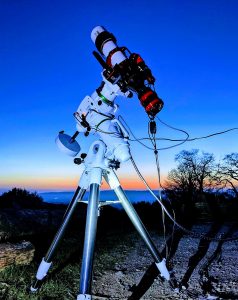
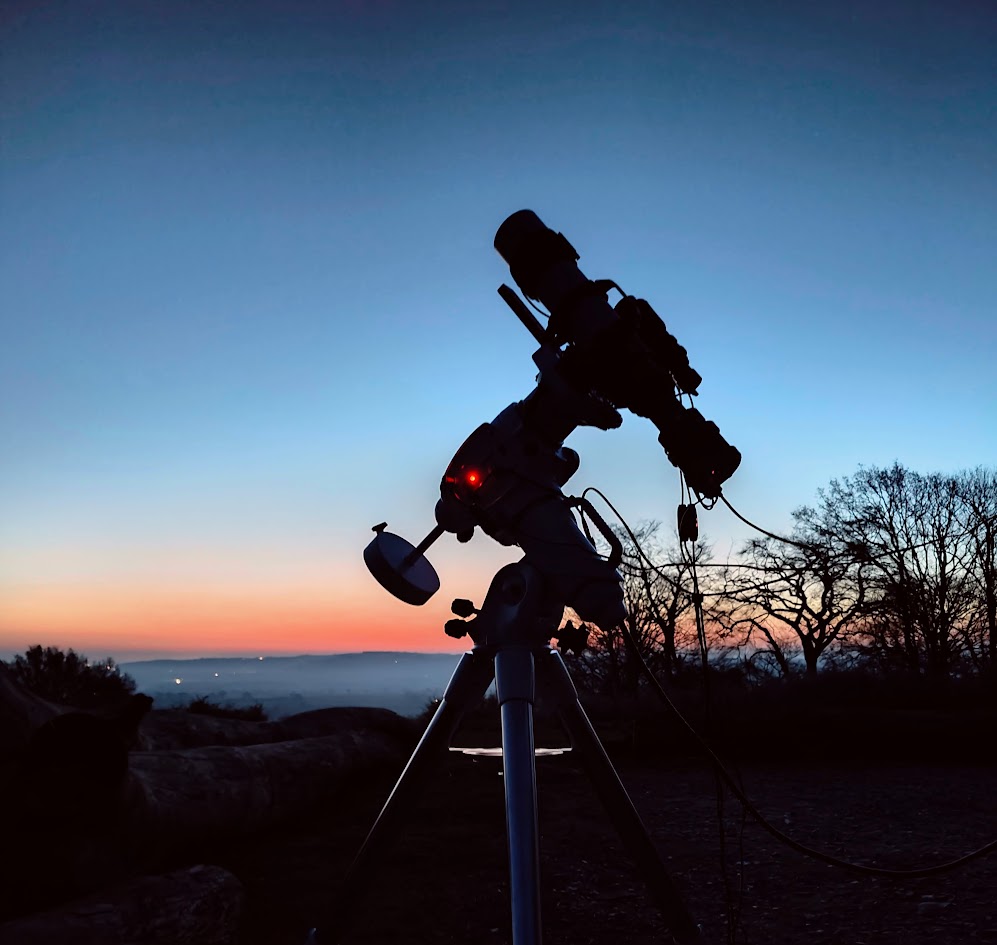
Astrophotography can be done with a wide range of equipment, from a simple camera on a tripod to more advanced, dedicated setups. As you progress, your setup typically becomes more specialised and automated. Here are the main components used in astrophotography:
- Camera: This can be a standard DSLR or mirrorless camera (stock or modified for astro), or a dedicated astronomy camera designed specifically for long exposures and low-noise imaging.
- Optics: You can use camera lenses or telescopes to collect light. The choice depends on what you want to photograph and the level of detail you’re aiming for.
- Mount: The most important part of an astrophotography setup. It supports your equipment and tracks the motion of the sky to allow for long exposures without star trailing.
- Filters: Used to control which wavelengths of light reach the camera. They can help reduce light pollution or isolate specific emission lines from objects like nebulae.
- Control System: As setups become more advanced, a computer or dedicated controller is often used to automate imaging, control the mount, and manage data capture.
- Guiding Equipment: A secondary camera to monitor a reference star and correct tracking errors in real time, improving image sharpness during long exposures.
A Gradual Learning Process
One of the great things about astrophotography is that you don’t need to start with expensive equipment. Many people begin with a simple camera, lens, and tripod, and gradually build a more advanced setup over time.
As you gain experience, you’ll learn how each part of the system contributes to the final image, from capturing the data to processing it into something meaningful. But ultimately, there is no substitute for experience. There’s no easy mode, and you will have to spend nights out in the cold working on equipment, but that is what makes it all worthwhile.
So, what is astrophotography? It’s capturing light that began its journey before our species even existed. It’s seeing the birth and death stars and the collisions of entire galaxies. It’s seeing a beauty that almost no one ever sees.
